The Row N/S Park Tote Buying Guide: Small vs Medium vs Large
Handle one for the third time and the whole thing lands, because the N/S Park Tote stops looking plain and starts reading as obvious. Nothing on it performs: no plaque, no monogram, no contrast stitching hoping to be photographed. The substitute is simple: a vertical proportion that stands unaided and handles placed to keep the bag flat against your side. That is the whole pitch, and it has been enough to make this the catalogue’s least noisy success and, on the numbers below, the brand’s strongest performer in the resale market. Nobody struggles with whether to buy one. The problem is picking between Small, Medium and Large, because all three look right on their own and show their differences only after they are loaded. Below, those differences are laid out next to the prices observed in the market in 2026, all of it market observation rather than an official price list.
What the N/S Designation Really Changes
The N/S in the name means north-south, so the bag is taller than it is wide, and that single decision about orientation explains most of how it carries. Contents stack instead of spreading out in a vertical tote, so nothing gets lost in a corner and everything stays within reach. It also sits closer to the body, which matters more than it sounds when you are negotiating a crowded street or a train carriage. The cost is that genuinely wide objects, a large laptop laid sideways for instance, struggle against the shape instead of settling into it. This shorthand runs across several families, and orientation is treated as a specification rather than the row bucket bag a styling note, which suits a house that names its bags by measurement rather than by mood. For anyone who has only carried horizontal totes, the first week with a vertical one feels like retraining a reflex before it starts feeling like an upgrade.
The Small: The Minimum Viable Bag
People dismiss the Small in photographs, then buy it regardless. It is built around the daily minimum rather than a laptop, which means a phone, a wallet, keys, sunglasses and a paperback rather than everything a working day demands. Because the proportion is vertical, it carries more than a horizontal tote of similar footprint, and it holds its line when half full. It reads most clearly as a intentional object rather than a container, and it photographs as a shape instead of a bag full of things. The trade is honest enough: overfill the Small and the line goes, and overfilling any soft-sided tote is the fastest route to ruining it. Prices observed in 2026 place the Small at $1,550 to $1,620, the cheapest way into the shape.
The Medium: The Size Most People Should Buy
The Medium takes the default slot, and it stays there because it is the one size that does not force a compromise. It takes a full day of belongings without surrendering its structure, and that is the most important quality of all in a bag with no rigid frame holding it up. It is also where the vertical proportion pays off most clearly, because the extra height gives depth for a bottle, a folder or a small camera without adding width against your body. Shoulder-carried it stays exactly where you put it; hand-carried it never drags on the ground. By some margin it is the most versatile row bag in the entry-to-middle price band, and it is the one that ends up in use rather than in the dust bag. Market observations from 2026 put the Medium between $1,650 and $1,950 depending on material and finish.
The Large: Capacity, With One Caveat
Regard the Large as a genuine work and travel bag and not a scaled-up accessory, because that is the purpose it should be bought for. It takes a laptop, a notebook, a change of shoes and the miscellaneous debris of a commute, all without the boxy stiffness that makes hard-sided work totes unpleasant to carry. The caveat is simple physics, because the bigger the soft tote the more it relies on you not overloading it, and a fully loaded Large leans instead of standing. It is also where the price range opens dramatically, from $1,990 to $3,250 in observed 2026 pricing, a wider spread than the Small and Medium combined. Anyone treating this as their only The Row tote bag will get far more use out of it than out of either smaller size. Bought as a second bag alongside a Medium, it tends to sit unused a good deal more often than buyers expect.
Observed 2026 Prices, Size by Size
The sizes ladder cleanly enough, but the gaps between them are smaller than the gaps inside them. Most size comparisons overlook that detail, since the gap between the cheapest and dearest Medium is bigger than the gap between the cheapest Medium and the cheapest Large. Read the table as a chart of where each size starts and stops, because these are prices observed in 2026 and no master list is published by the brand. The narrow band on the Small tells you it comes in fewer variations. The wide band on the Large says the opposite. Every one of the three sits in the middle price tier of the collection, comfortably below the Margaux family and comfortably above the pouches and wallets.
| Size | Price observed in 2026 | Best for |
|---|---|---|
| Small | $1,550 to $1,620 | Daily minimum, evening use, the neatest version of the shape |
| Medium | $1,650 to $1,950 | Everyday carry, the obvious choice for most buyers |
| Large | $1,990 to $3,250 | Work, laptops, travel, planned overcapacity |
Why a Single Size Spans Such a Wide Range
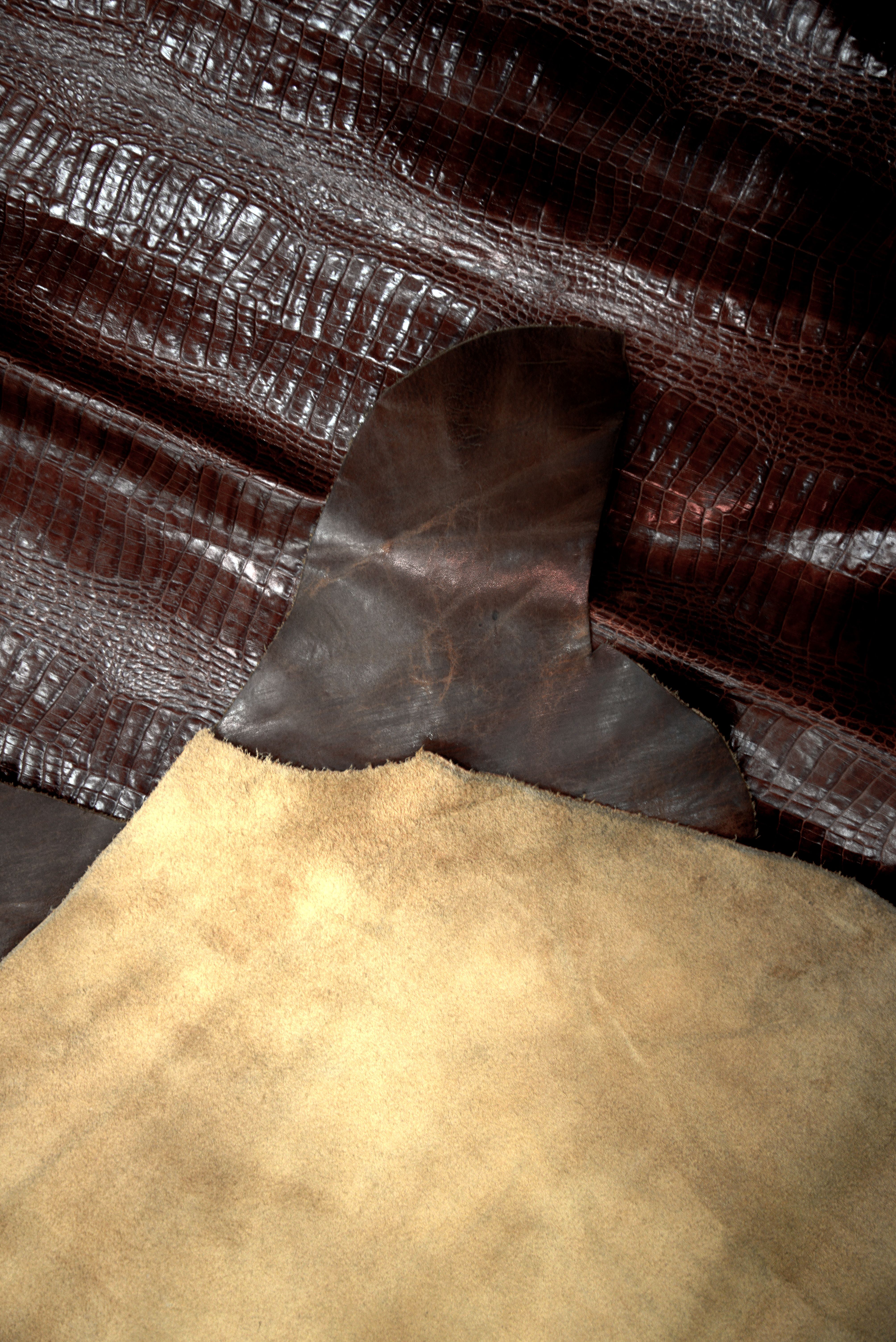
The spread within a single size follows material and finish rather than capacity, worth grasping before you assume a dearer Large is a bigger Large. Across the collection the exterior materials run from smooth, matte grained, saddle and polished calfskin through suede, canvas, nylon and woven sisal, and each of those carries a different price. Suede consistently costs more than calfskin on an identical silhouette elsewhere in the line, and stitched or edge-finished treatments add cost on top. Linings obey the same logic, because the house uses nappa, lambskin, calfskin and cotton herringbone instead of a printed logo jacquard, and those carry real cost. Throughout the collection the hardware is palladium-plated and finished matte or brushed, which rules it out as the source of the variation. The practical takeaway is that you are choosing a material at a given size, not buying a superior version of the same bag.
Where the Rest of the Park Family Fits
The N/S Park Tote is one member of a wider family, and knowing its neighbours prevents an expensive mistake. The Park Tote itself comes in Small and Medium at $1,450 to $1,620 in observed 2026 pricing, which puts it marginally below the N/S on price. Across its edge, stitch and canvas executions the Park Tote Three runs $1,750 to $2,400, which suits anyone drawn to the family but after a visibly different construction. Sitting above them, the XL Park Tote is $2,490, while a stitched XL has been observed at $4,570, and that jump comes from handwork rather than size. Below the whole group is the N/S Park Crossbody at $1,290, the cheapest entry into the shape language and a genuinely useful bag in its own right. Between them these five cover almost every use case, which is why so many owners of one The Row bag end up owning two.
Resale, Care and the Verdict
Beyond being a good bag, the N/S Park Tote is the strongest resale performer the brand has recorded. The Rebag CLAIR 2025 report has it at 146 percent value retention, the strongest of any model listed for the label, alongside a brand-level figure of 97 percent that put The Row into the report’s unicorn tier for the first time. That is observed market behaviour rather than investment advice, and it carries a qualification: canvas, nylon, sisal and seasonal-colour pieces routinely discount, and the strength sits in black and neutral leather. Care follows the material rather than any brand-issued protocol, which means buffing calfskin with a soft dry cloth, brushing suede and keeping it away from water, and spot-cleaning woven versions only. Never overfill any of the three sizes, and store the bag lightly stuffed in its dust bag so the shape survives. Take the Small if you carry little, the Large if you commute with a laptop, and the Medium if you cannot decide, because the Medium is the one you will actually use.
- Small at $1,550 to $1,620: the most sculptural reading of the shape
- Medium at $1,650 to $1,950: the everyday choice for most buyers
- Large at $1,990 to $3,250: working days, travel and the widest choice of materials